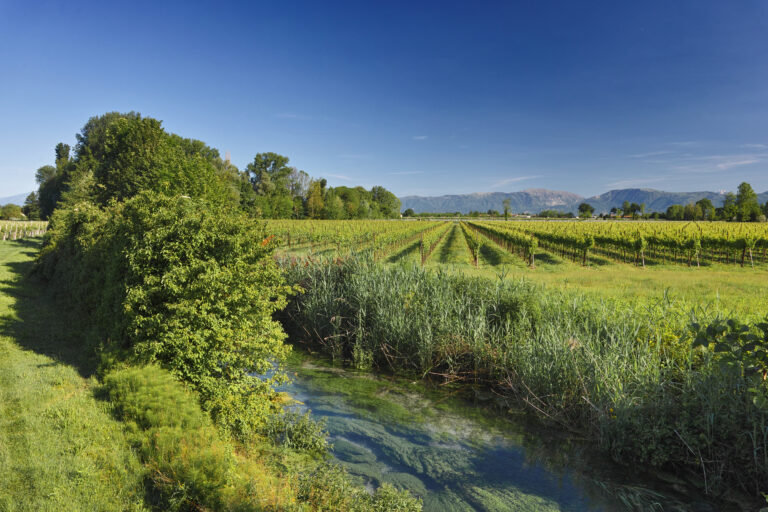

Shared resources, solutions at scale: Regenerative landscapes in Prosecco
No matter how many times you hear “collaboration is key” when it comes to sustainability, it doesn’t make it any less true. What that collaboration actually looks like, however, is another question. One way to move beyond siloed action is to engage in a landscape initiative. These collective interventions span large areas and bring together multiple stakeholders, sectors, and farms to achieve economic, social, and environmental goals.
The Landscape Enterprise Networks (LENs) is a fantastic example of this in practice. This collaborative, long-term partnerships model, developed by 3Keel, joins stakeholders from across sourcing regions to co-invest in nature-based solutions. Over the last four years, local implementation partner Preferred by Nature has facilitated the roll out of LENs projects in Poland, Hungary and Italy, supporting farms and suppliers to scale the transition to regenerative agriculture.
Launched in 2022, LENs in Italy included viticulture among its focus areas, backed by Consorzio Tutela Prosecco DOC and Nestlé Purina. Given their shared interests in the Veneto and Friuli-Venezia Giulia regions, two areas with a history of intensive ploughing, they decided to co-invest in the LENs initiative. This partnership has enabled them to share the costs and risks of improving the environmental resilience of their shared landscapes, where grapes and cereals are grown.
The project aims to enhance soil health, reduce erosion, and increase biodiversity. As the local implementation partner, Preferred by Nature manages the delivery and coordination of the program on the ground. They work collaboratively with farmers, researchers, and other local bodies, including Agrinnovazione, WBA, CSQA, Agricarbon, Biodistretto di Venezia, and CREA. By engaging a wide network of stakeholders, Preferred by Nature provides technical support based on local expertise, facilitates knowledge sharing among all parties, and identifies synergies with other ongoing initiatives in the region.
I recently spoke to Federica Spina, senior sustainability specialist at Preferred by Nature. She explains that each year, farmers can apply and become part of the next annual project cycle. The 2025 cycle saw 45 farms participate, with sustainable agriculture practices implemented across 3,008 hectares. The program has a strong focus on innovation, so they aim to engage farmers who are interested in using funding opportunities to trial methods outside traditional vineyard management.
Practices currently being tested include compost tea production, nature corridors, inter-row vegetation, and soil restoration techniques. “Inter-row vegetation management is a popular practice among farmers, and compost tea is especially interesting given its potential to reduce copper usage,” notes Federica. Early insights from these trials are shared within the LENs consortium, helping to spread knowledge and increase the adoption of evidence-based regenerative practices across the Prosecco landscape.
As with any multi-stakeholder project, there are numerous varying expectations and priorities to manage. Federica stresses the importance of communication and transparency to avoid potential conflicts, as well as to help build trust, a key ingredient of any successful partnership. Overall, the LENs projects have delivered measurable outcomes across a number of impact areas including water, soil, and biodiversity, as outlined in the 2024 impact report.
In light of the success of the Prosecco project, LENs hopes to replicate these learnings across other wine growing regions. If you’re interested in getting involved or learning more, please reach out to Federica at fsp@pbn.org.
Read more about the project here.
Featured members