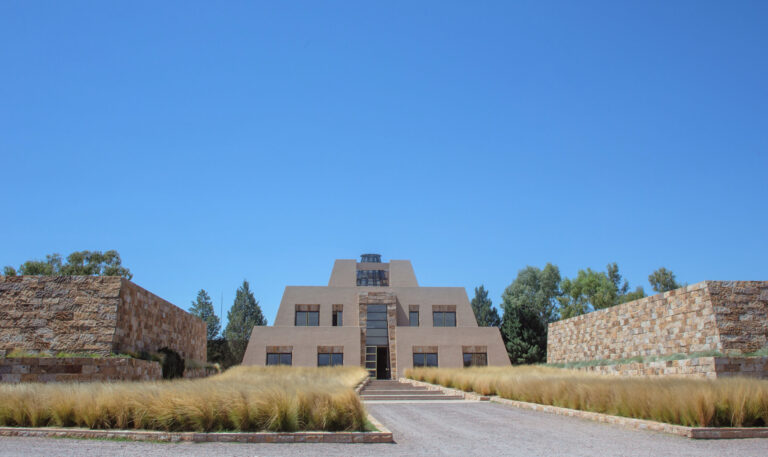

Innovation in Argentina: A day at the Catena Institute of Wine
Earlier this year in February, Silvina Van Houten and her colleagues welcomed SWR Membership Manager Ilva Fridenberga to the Catena Institute of Wine. The Institute is the scientific research arm of the family-owned winery Catena Zapata in Mendoza, Argentina. Its work is focused on continuing to elevate the region’s historic variety, Malbec, while helping future-proof Argentine winemaking.
When they’re not busy with the harvest, the Catena team is carrying out a wide range of research. Current projects include studying the effects of high-altitude sunlight intensity, preserving vine genetic diversity, exploring soil microbiomes, massale selections, ungrafted vines, and identifying Grand Cru-level sites in new Andean winegrowing areas. Their peer-reviewed scientific publications offer valuable insights for the wider wine community and can be accessed here.
Beyond the vineyard, the team has also made significant progress on bottle lightweighting. A signatory of SWR’s Bottle Weight Accord, Catena Zapata has reduced its average bottle weight to 416 grams (as of 2024). A display at their office showcases the evolution of their bottle designs over time. To help visitors understand the changes, the team has also created a short interactive quiz explaining the rationale behind the bottle weight reductions. You can take the quiz here.
Vineyard Manager Luis Reginato, who leads the development of new vineyards and wines, highlighted one of the region’s biggest challenges: water management. Although the vineyards were lush and green during Ilva’s visit in February after recent rainfall, water use and irrigation typically require careful planning. In Mendoza, groundwater access is tightly regulated, and new wells are no longer permitted in order to protect reserves. The team is testing solutions from other wine regions and working with experts at the University of Talca in Chile to improve vineyard practices, with a focus on producing high-quality grapes while using water more efficiently. The goal is to preserve natural resources, protect vineyard longevity, and build resilience to climate change and prolonged drought.
The Catena Institute of Wine works closely with SWR members and has led major research projects in winemaking and high-altitude viticulture in collaboration with academics in France (University of Burgundy), California (UC Davis), and local institutions in Argentina. Their work reflects a strong commitment to innovation, ensuring both the quality of their wines and resilience in the face of climate challenges.
A huge thank you again to Silvina Van Houten, Jenifer Cugat, Luis Reginato, and everyone at the Catena Institute of Wine for their warm welcome and for being such valued members of SWR.
Featured members