Oct 26, 2026

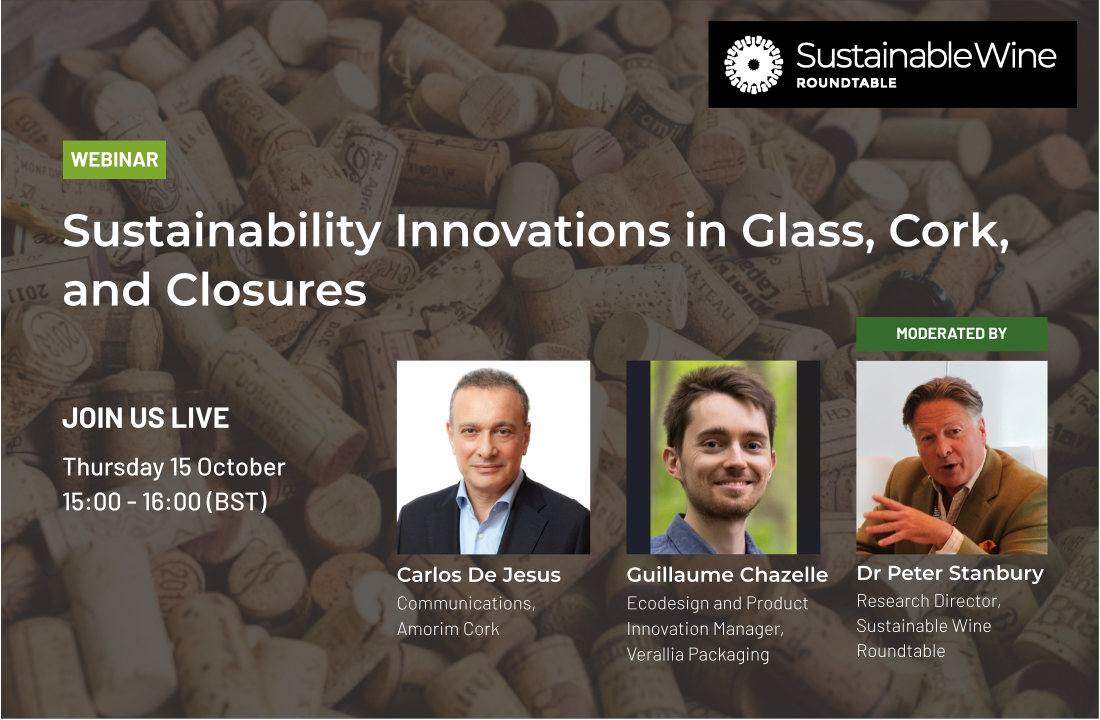
Sustainability Innovations in Glass, Cork, and Closures
In our latest webinar, SWR explored how innovation across the wine packaging supply chain is helping to reduce environmental impacts, from glass and cork production to innovations in the materials, design and recycling. The session also shared the first insights from the SWR Packaging Choice Tool report.
SWR Research Director Dr Peter Stanbury was joined by Guillaume Chazelle (Verallia) and Carlos De Jesus (Amorim Cork) to discuss the latest developments in glass and closures, the challenges producers are tackling, and what these changes mean for wineries’ future packaging choices.
Key Takeaways
A few takeaways from the discussion:
- There is no single best wine package. The sustainable choice depends on the market, recycling infrastructure, product quality, regulation, logistics, consumer preference and cost.
- Packaging can be a sales opportunity. Smaller servings and alternative formats may suit occasions where a standard 750ml bottle does not. SWR is developing a choice tool to assist specialists across the supply chain to assess those options.
- Recyclable does not mean recycled. Even if materials are recyclable, their collection rates on each material vary by type and country.
- Lightweight glass is a practical route forward. Verallia’s 300g wine bottles show how design and production controls can reduce weight while maintaining viability and shelf appeal.
- Sustainability goes beyond carbon dioxide emissions. Cork’s case brought biodiversity, jobs and long-term carbon retention into the discussion, alongside concerns about how UK EPR rates cork.
Want to get involved?
- Read the SWR Packaging Choice Tool report here.
- Join the Bottle Weight Accord or the Sparkling Bottle Weight Accord.
Featured members

Amorim Cork
Packaging supplier