
This week SWR launched the Sparkling Bottle Weight Accord, an initiative dedicated to lightweighting sparkling wine bottles. Building on the success of the Bottle Weight Accord for still wine, with signatories now covering more than 3 billion bottles, the Sparkling Bottle Weight Accord addresses a new opportunity to reduce costs and emissions across the sparkling wine supply chain, while tackling the sector’s unique challenges around pressure, safety, and time on lees.

Targets are set by three pressure-based weight targets:

  • 550g for semi-sparkling wine (up to 3 bar)
  • 600g for Charmat method (3–5 bar)
  • 780g for traditional method (5–7 bar)

We are proud to announce the founding signatories: Alko, Ellis Wines, Guy Anderson Wines, North South Wines, Vilarnau Cava, Vinarchy, Virgin Wines, Perlage, Systembolaget, and The Wine Society.

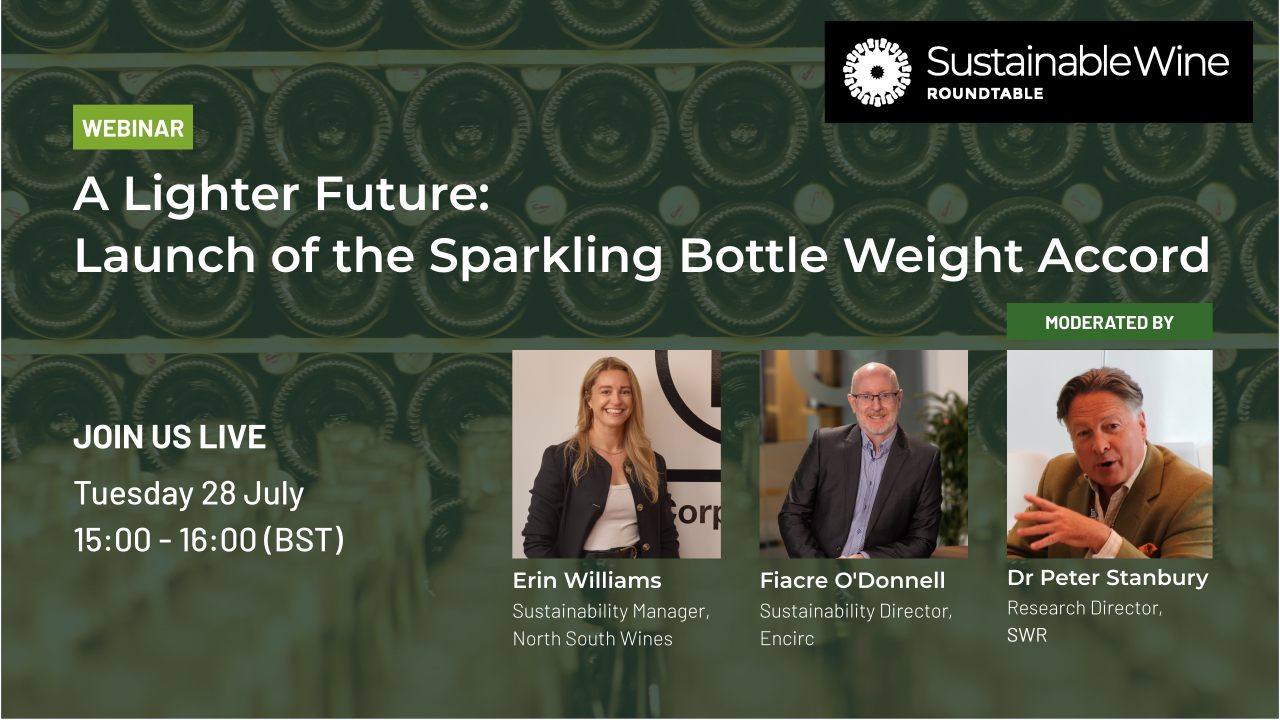
In the launch webinar, SWR Research Director Dr Peter Stanbury was joined by Fiacre O’Donnell (Encirc) and Erin Williams (North South Wines) to share practical insights into bottle lightweighting, the challenges involved, common misconceptions, and what it takes to make real progress.

Key Takeaways

A few takeaways from the discussion:

  • Progress over perfection. Speakers repeatedly framed the accord as direction of travel to 2030, and the targets that are already proven in market, start where feasible, and improve over time rather than treating this as rigid compliance.
  • Successful lightweighting depends on system design, not just lighter glass. The discussion tied safety and feasibility to carbonation, filling lines, packaging, transport, and early collaboration with bottle manufacturers.
  • Asking suppliers directly is already shifting adoption. Speakers shared that raising bottle-weight questions with suppliers has driven measurable movement in both still and sparkling portfolios.
  • The case for action is both commercial and sustainability-led. The group linked lightweighting to EPR and logistics savings, lower carbon, and a simpler sustainability message for consumers, especially if communicated clearly at point of sale.
  • Decisions need to stay holistic. A recurring discussion point was that carbon savings alone are not enough: bulk shipping, sourcing, and lightweighting choices also need to account for social and economic impacts in producer regions.

Want to get involved?

Interested in getting involved or have any questions? Contact Luke Mobley at luke@swroundtable.org.