


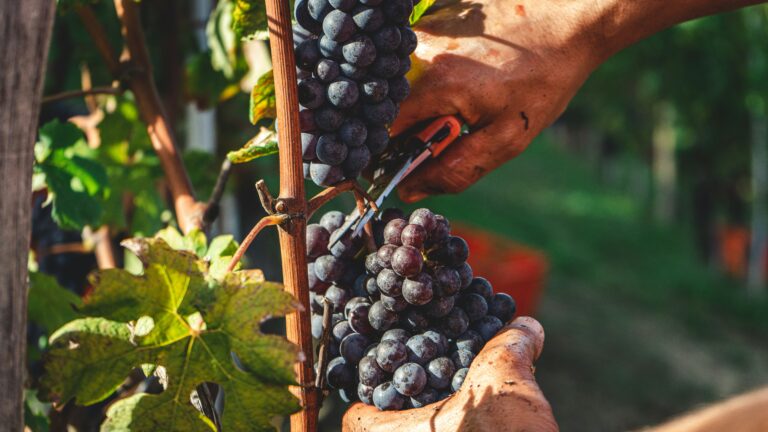

The Sustainable Vineyard
“You cannot be green if you’re in the red” might be a very tired cliché, but that does not make it any less true. The agenda which now gets called ‘sustainability’ becomes increasingly long and complicated, with what can sometimes appear to be an increasingly long list of costs attached. And that is quite aside from the time and effort needed to fill in audits and questionnaires to demonstrate what is being done.
Too many in the sustainability world are inclined to forget that the concept has three pillars: environment, people, and economics. Actions on improving energy efficiency or water use or improving conditions for workers therefore need to be undertaken in an environment where a company can continue to be profitable.
SWR seeks to always be pragmatic in how it catalyses sustainable change in the wine sector. Indeed, one of the key lessons we have learned from our benchmarking work is that the best standards are those which work with companies to develop an action plan to be implemented over time. This means that companies can develop their sustainability work as capability and resources permit.
We also know that cooperation works. The best example being SWR’s Bottle Weight Accord, which now covers more than 2.5 billion bottles. When the Accord was launched, many of those joining it had explored the importance of bottle weight reduction, yet it was by working with others that those companies were able to achieve impact at scale.
And this is precisely the point: cooperation means that we don’t all have to start from square one; we can learn more quickly because we can build on the efforts of others. That’s not just smart: it makes financial sense too. Driving change by being smart and efficient is the core of what SWR does.
However, we recently realised that in two areas of our work, labour rights and viticulture, we risked exacerbating the problem we are seeking to solve, by creating more work, not sharing potential solutions.
In the downstream of wine, at the distributors and retailers, labour issues and viticultural ones are often dealt with by different teams. Upstream, however, in vineyards and wineries, they are often dealt with by the same, small group of people. Efficiency and cost-effectiveness therefore mean that these two topics must be worked on as two aspects of the same task: to create a sustainable vineyard.
And that is the label we will use – The Sustainable Vineyard. This will not affect the work plans we have already set out for these action areas, simply that where relevant and appropriate they will work together.
The aim is to be efficient in the sort of information we seek. Not detailed, compliance-focused data, but insights for us to be able to ‘take the temperature’ on key issues. We will also look to identify tools and approaches which can be shared to help accelerate change.
The aim is to re-establish the often-forgotten third leg of sustainability: that economic affordability and efficiency is a key part of real, durable sustainability.
If you’d like to know more about ‘The Sustainable Vineyard’ and the work it encompasses, please do get in touch with Ilva@SWRoundtable.org


